Year: 2020 | Role: Strategic Designer — Merge Enterprise
Strategic Design · Digital Transformation · Healthcare Systems
The Challenge
Public hospitals across Thailand were being asked to digitize. The pressure was real, the budgets were tight, and the systems were already stretched. But the harder problem was never the technology. It was the people inside the hospitals: doctors, nurses, administrative staff, and department heads who had been doing things a certain way for years, often with good reason, and who were now being told to change. The question was how to help institutions transform without treating the humans inside them as obstacles to manage.
What I Did
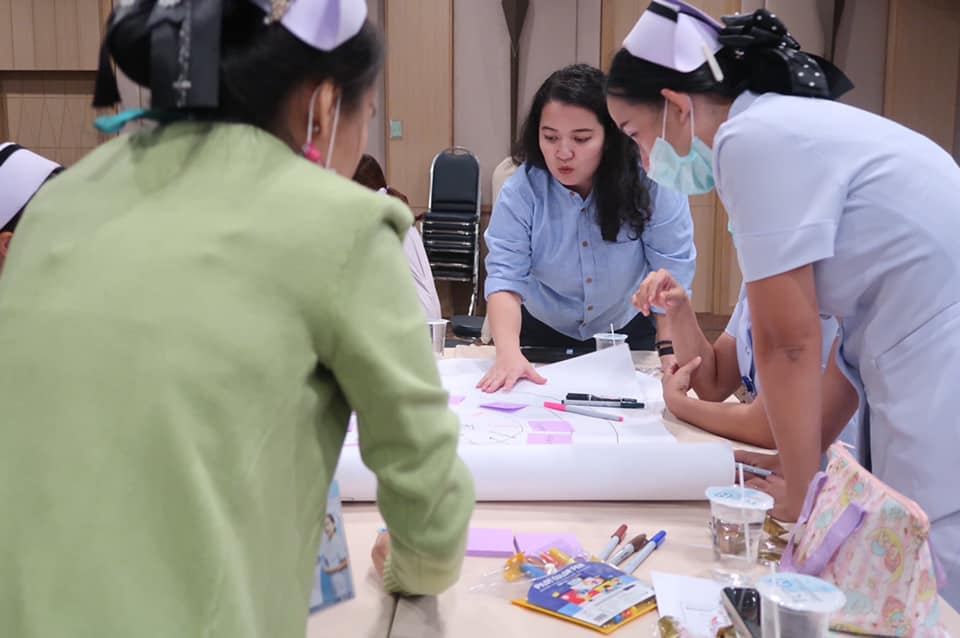
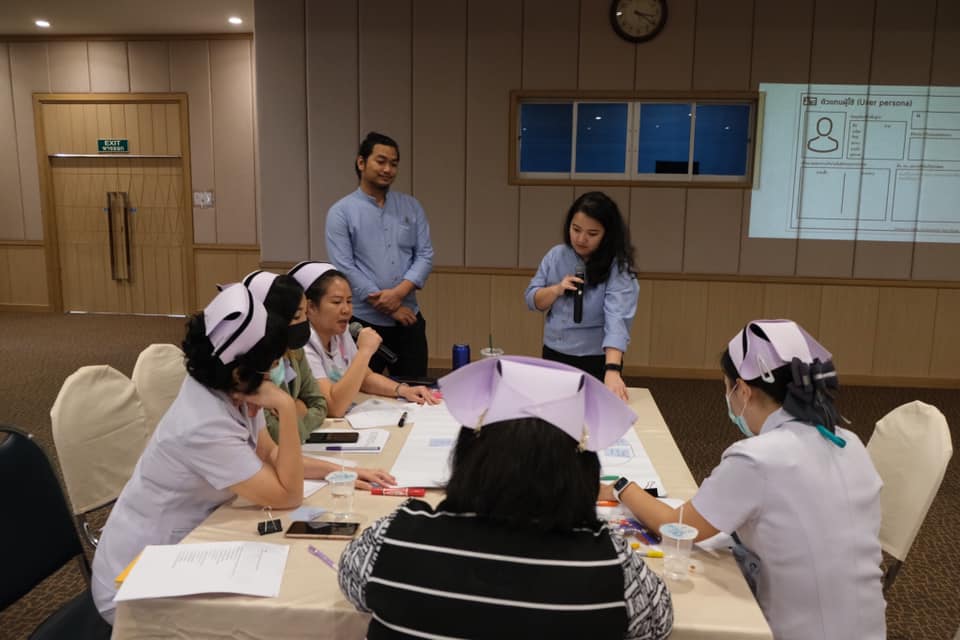
As Strategic Designer at Merge Enterprise, I traveled to hospitals across Thailand, running Healthcare Changemaker workshops with multidisciplinary medical teams. The core of the work was journey mapping: sitting with people from different departments and asking them to trace how care actually moved through their hospital, not how it was supposed to move on paper. Those sessions revealed gaps, workarounds, and knowledge that no process document had ever captured.
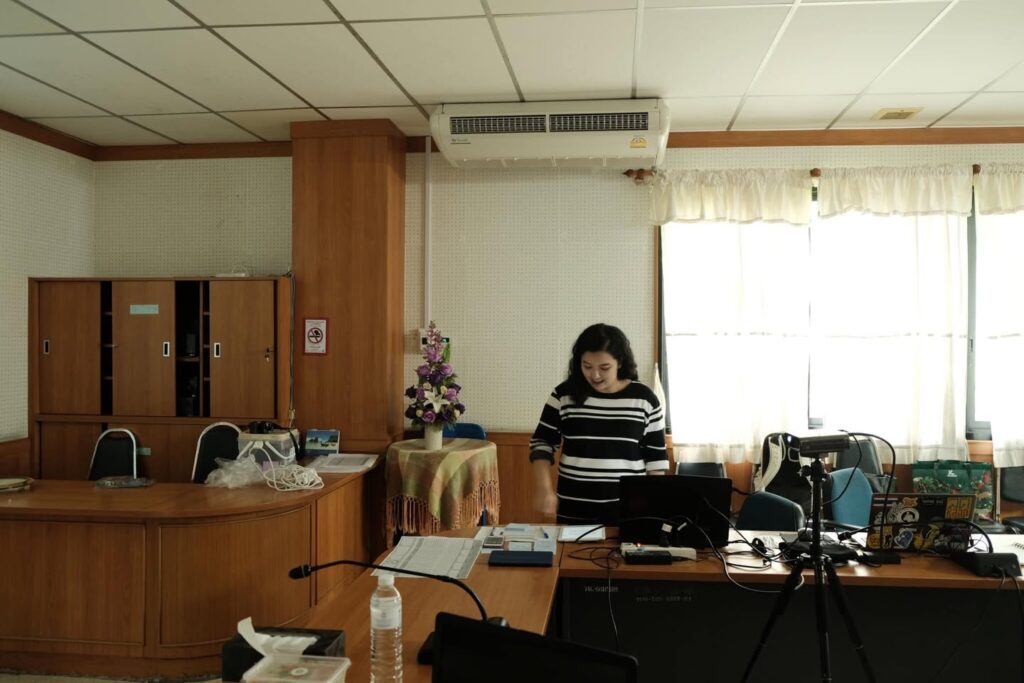
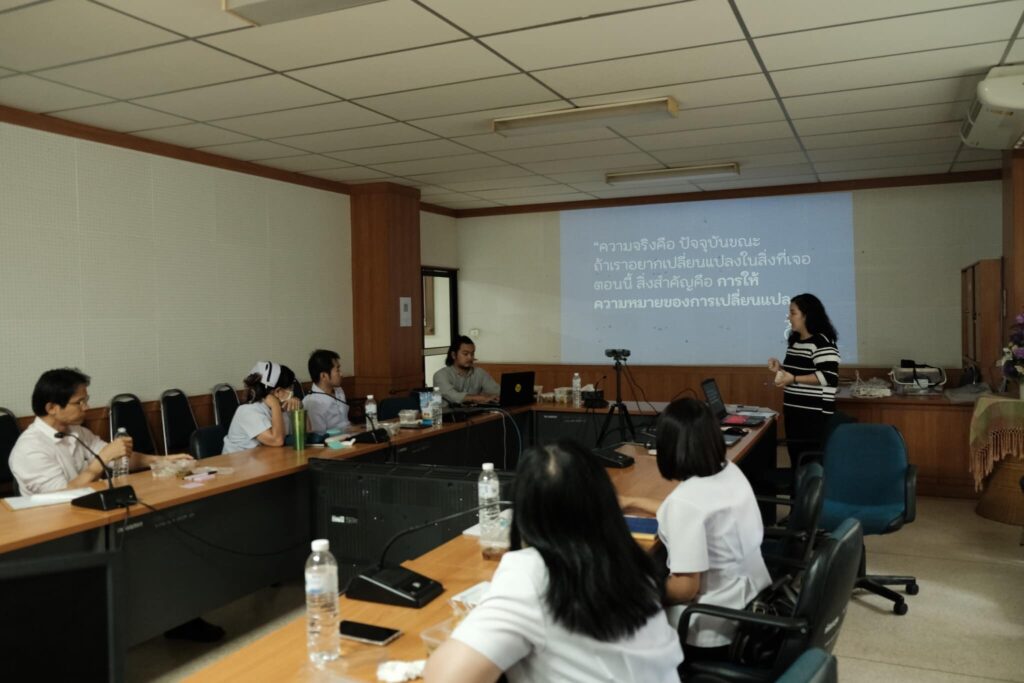
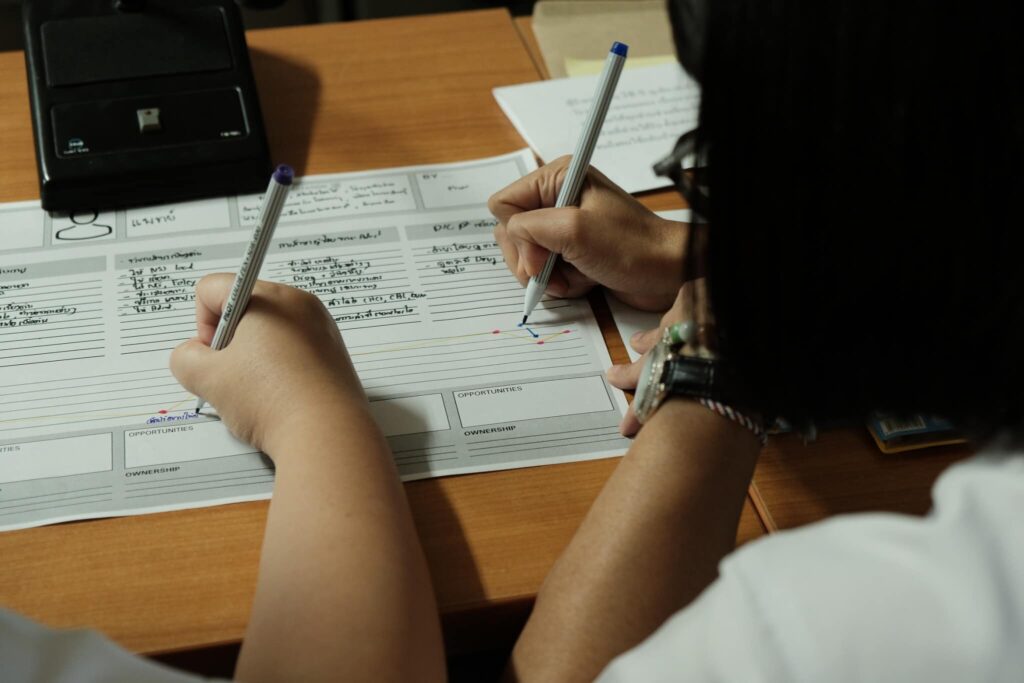
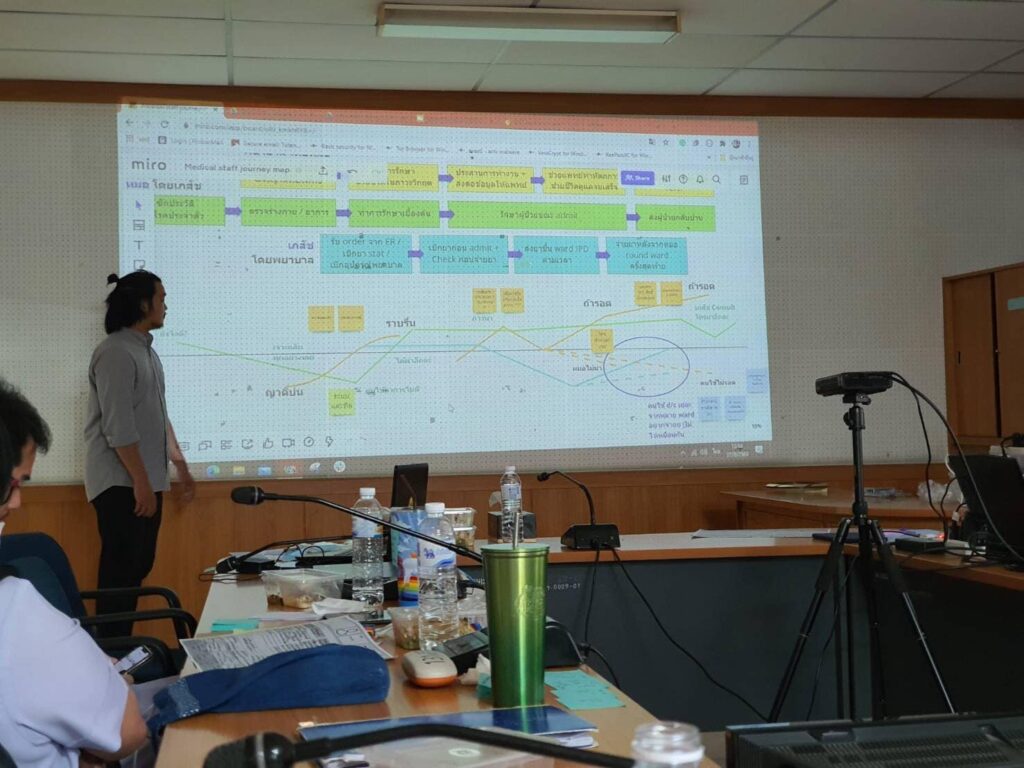
The framework we worked with was simple but grounding: Human centric approached. It kept conversations from drifting into abstract tech idealism and anchored them in what hospitals are actually for. We also held space for something less quantifiable: the belief that good healthcare systems need to balance evidence-based science with the human and even spiritual dimensions of care.
I learned most of what I know about facilitation in this work. My mentor, Adsadakorn Chadtranan, modeled what it looks like to hold a room with genuine presence, and that shaped how I approached every workshop. 2020 was supposed to be a year of formal study for me; COVID19 made that impossible, and instead it became the deepest kind of inner learning, through the work itself.
Outcomes
By the end of the engagement, each hospital we worked with had a clearer, staff-authored picture of where their transformation needed to start and why. The work shifted the frame from “implementing new software” to “redesigning how we work together,” which is the only frame that actually produces change. The year dissolved a lot of what I thought I knew and rebuilt something more useful in its place.