Year: 2016–2018 | Role: Country Coordinator — Thailand
Youth Advocacy · Reproductive Rights · Sex Education
The Challenge
I met Jillian at Mae Tao Clinic: a Canadian researcher traveling across South and Southeast Asia for family planning work. She was setting up a youth advocacy network and asked if I wanted to be Thailand country coordinator. I already cared deeply about family planning, sex education, and sexual rights. I said yes.
IYAFP, the International Youth Alliance for Family Planning, works with young people aged 15 to 28 as advocates for sexual and reproductive health and rights. In Thailand, these conversations are not easy to have. The topics are considered private, often shameful, and largely absent from school curricula. Young people were asking questions with nowhere to take them.
What I Did
I wrote a funding proposal and secured a small grant to run activities in Chiang Mai. From there I built a local program that worked across several fronts.
The first was direct education. Together with Saturday School in Chiang Mai, I brought SRHR workshops into schools, teaching Grade 5 and 6 students about peer pressure, puberty, menstruation and pregnancy, and sexual diversity including LGBTQ topics. The sessions used role-playing, shared experience, and activities designed to make young people feel safe enough to ask real questions.
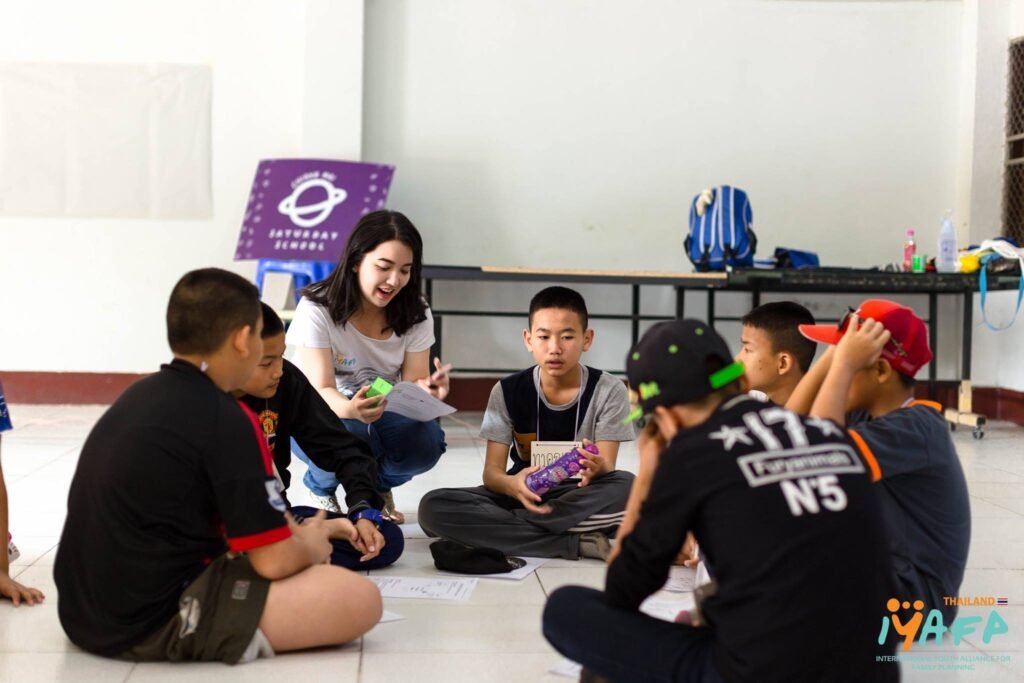
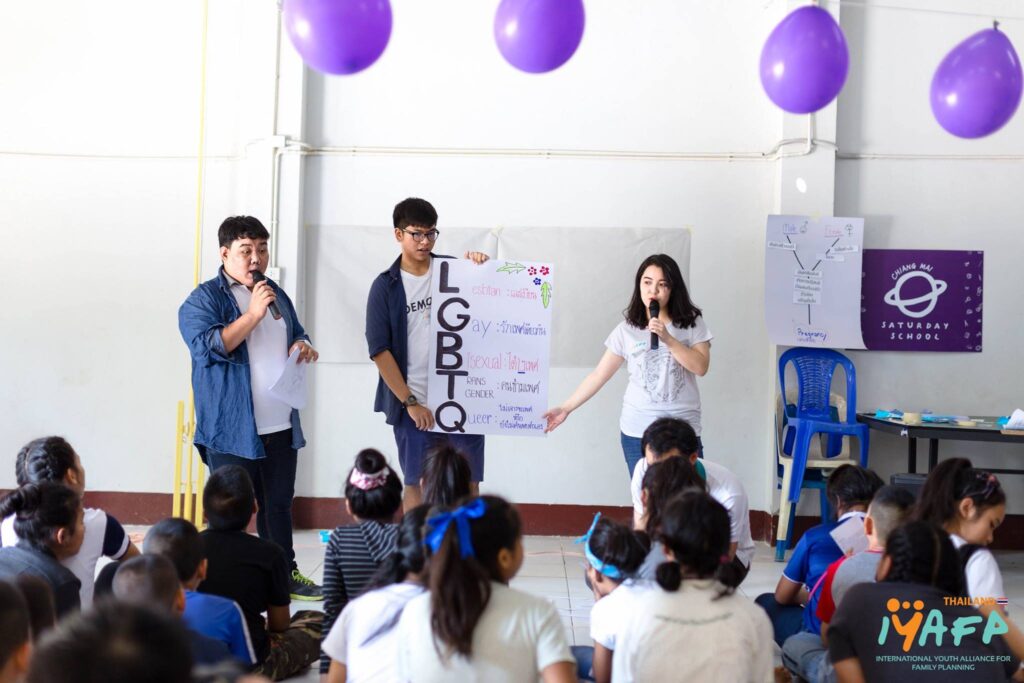
And they did. After one session, students came to me privately: Is it okay that I like boys-love dramas? Can you get pregnant before your first period? My friend got teased for being gay, is that wrong?
During one group discussion, a girl spoke up without being prompted. She said she felt angry when boys mocked her friend for being gay. “It’s his right to be whatever he wants to be,” she said. That one sentence, from a primary school student, made the whole session worth it.
The second front was public programming. I organized “Tank Talk,” a documentary screening and discussion series. One screening featured Jackson, a film about the last abortion clinic in Mississippi, shown in collaboration with Documentary Club, Women Help Women, Women on Web, and a coalition of reproductive health organizations across Thailand. Bringing that conversation into a public space, in Chiang Mai, with people willing to sit in a room and talk about it honestly, felt significant.
The third was network building: connecting IYAFP’s work to the broader ecosystem of organizations already doing this work in Thailand, so that what we did locally was part of something larger.
Outcomes
Over three years I helped establish IYAFP Thailand as an active local chapter with community programming, school partnerships, and coalition connections across the reproductive health sector. Young people in Chiang Mai had more access to honest information than they did before. A few of them asked questions they had been too afraid to ask anywhere else.
Working with Women Help Women on the film screening was also the beginning of a longer relationship. A few years later, that connection became something more formal, which is the next part of this story.