Year: 2017 | Role: Co-organizer & Program Designer
Youth Programming · Event Design · Community Building
The Why
Chiang Mai has one of the richest cultural heritages in Thailand: Lanna language, music, food, art, a whole way of knowing that accumulated over centuries. And young people in the city mostly related to it as something belonging to their grandparents. Not because they didn’t care, but because nobody had made it feel like theirs.
I didn’t see many young people in Chiang Mai actively doing something about that. Culture was being preserved, but it wasn’t moving. It needed to be pulled into something alive.
What I Did
Sound Muan was built by a new volunteer team that grew out of TEDxChiangMai. The name carries a few layers: “sounds fun” in English, “ม่วน” which is Northern Thai dialect for fun and enjoyable, and “ซาว” which means twenty in the local language, a nod to the generation we were building it for. Young people, by young people.
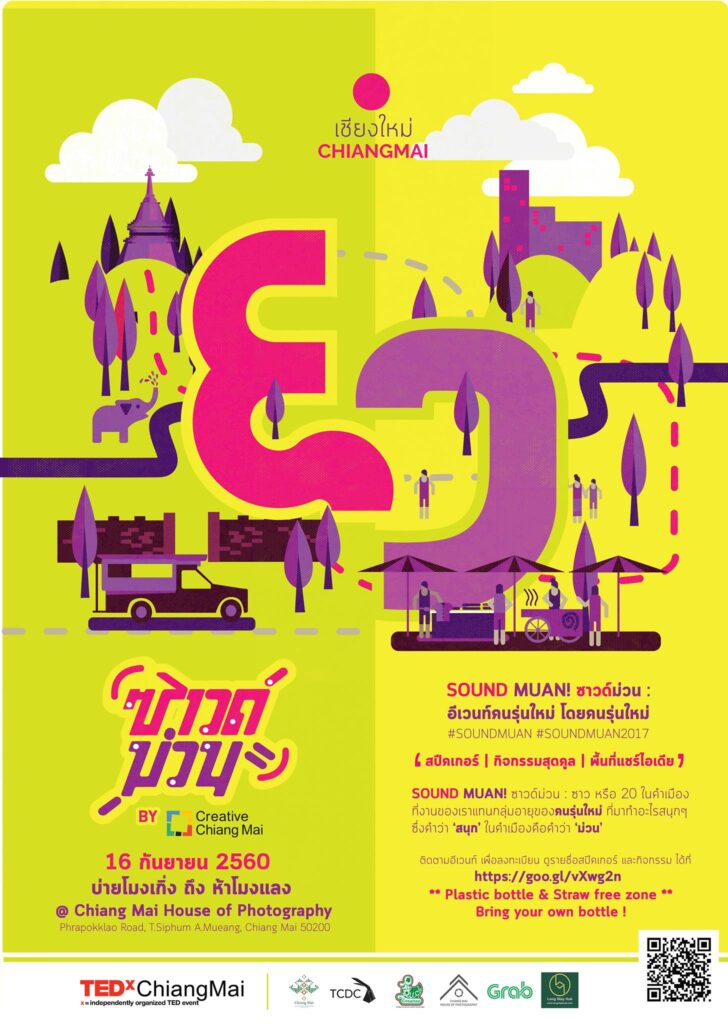
The format was 4 speakers sharing ideas across language, food, art, and music, all rooted in Lanna heritage but framed in a way that felt pop, current, and easy to enter. The goal was to prove that Thai cultural wisdom could be chic and cool. Not as a museum piece. As a living thing that this generation could pick up and do something with.
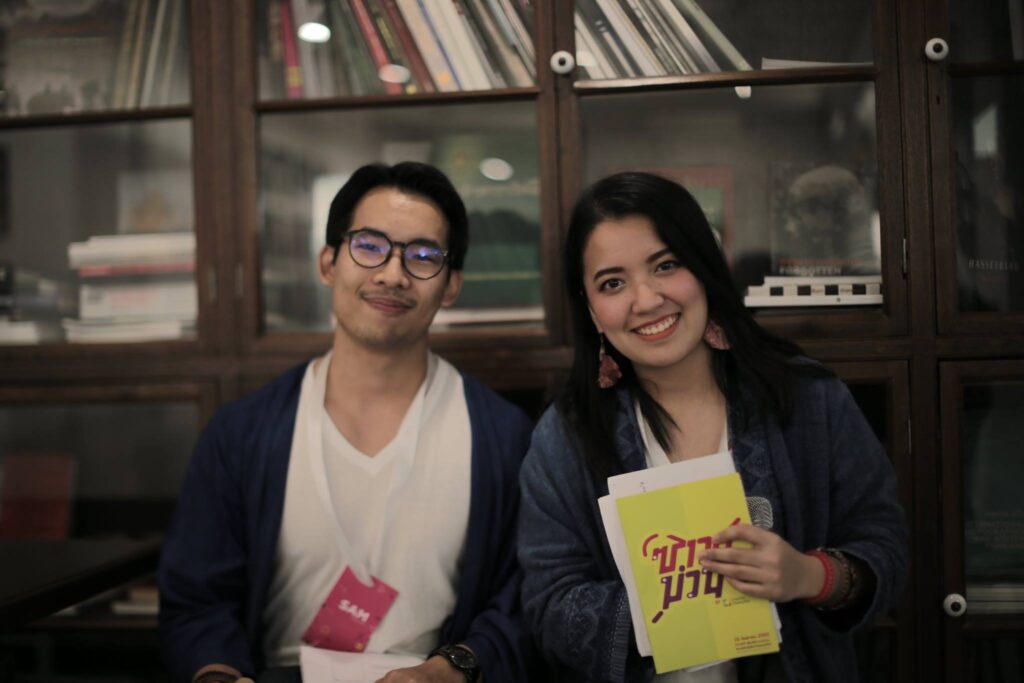
We made it free for young people and charged older attendees to come. We curated the audience, selecting participants through applications to make sure the people in the room were genuinely engaged. Reading those applications every day in the lead-up became one of the best parts of the process: the range of people who wanted to be there was surprising and genuinely moving. A lot of people cared deeply about public transport in Chiang Mai. Homeschool students applied. People who didn’t fit neatly into any obvious category showed up, because this event wasn’t built for a category.
Outcomes
Sound Muan demonstrated something simple but important: young people in Chiang Mai were hungry for a platform that took their relationship with their own culture seriously, without being solemn about it. The event created a space where that could happen, fun and grounded at the same time.
For me it was also an early proof of something I kept coming back to: the best community events don’t just bring people together. They give people a way to see themselves as part of something worth building.